
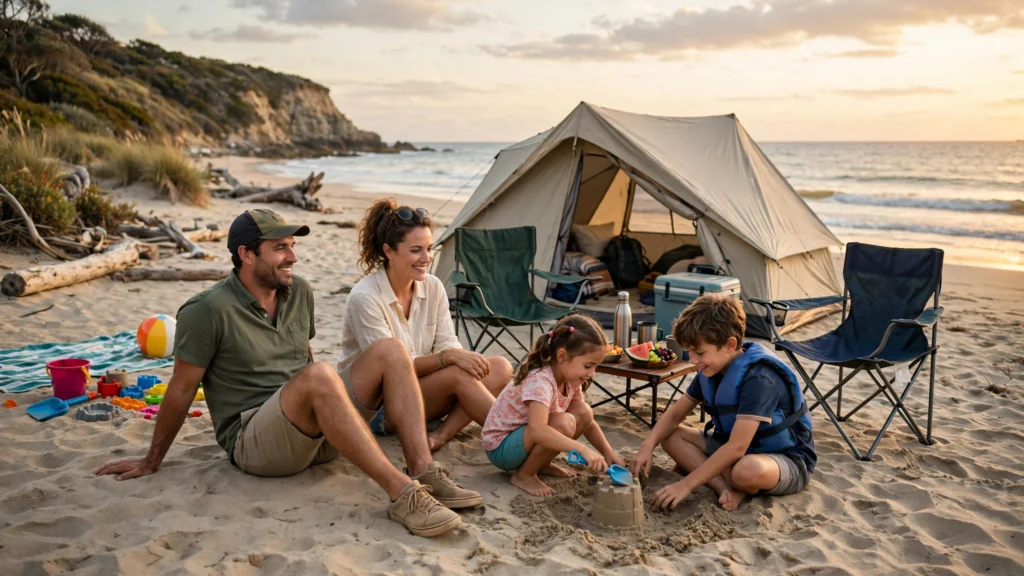
Beach Camping offers families a unique way to combine relaxation, outdoor adventure, and quality time in one affordable vacation. Unlike busy resorts, it creates opportunities to unplug from daily routines while enjoying nature together. Families can swim, explore shorelines, cook outdoors, and build lasting memories without complicated travel plans.
Many families now prefer Beach Camping because it delivers flexibility and meaningful experiences. According to the Outdoor Industry Association, millions of Americans participate in camping every year, with coastal campgrounds remaining among the most popular destinations during warmer months. Beach Camping encourages children to learn practical outdoor skills while giving adults a peaceful setting to recharge away from everyday distractions.
Why Beach Camping Strengthens Family Bonds
Beach Camping naturally encourages families to spend more time together without constant digital interruptions. Shared activities build stronger relationships while creating memories that often last for years. Instead of separate entertainment, everyone participates in simple outdoor experiences that bring genuine enjoyment.
Shared Adventures Create Lasting Memories
Families experience countless activities during Beach Camping that require teamwork and communication. Children collect shells, parents prepare meals, and everyone enjoys beach walks together. These shared experiences develop trust while strengthening family relationships through meaningful interaction instead of screen time.
Some popular family activities include:
- Building large sandcastles together.
- Collecting seashells and learning about marine life.
- Watching the sunrise and sunset over the ocean.
- Flying kites along open beaches.
- Cooking dinner over a campfire.
- Playing beach volleyball or frisbee.
- Stargazing after dark.
Beach Camping Is a Budget-Friendly Vacation
Family vacations often become expensive because of hotels, restaurants, and entertainment fees. Beach Camping significantly lowers many of these costs while providing access to natural attractions that require little or no admission. Families enjoy more experiences without exceeding their travel budget.
Save More While Enjoying More
Camping fees typically cost much less than beachfront hotels. Preparing meals at the campsite also reduces restaurant expenses throughout the trip. Many public beaches include hiking trails, fishing areas, playgrounds, and wildlife viewing without additional charges.
| Vacation Expense | Beach Camping | Beach Resort |
|---|---|---|
| Accommodation | Low | High |
| Meals | Self-cooked | Restaurant dining |
| Entertainment | Mostly free | Often paid |
| Outdoor Activities | Included | Additional fees may apply |
| Overall Budget | Affordable | Expensive |
Families often discover that lower spending allows longer vacations or additional weekend trips throughout the year.
Beach Camping Supports Children’s Learning
Beach Camping provides an outdoor classroom where children develop practical knowledge through firsthand experiences. Every day introduces opportunities to observe wildlife, understand weather patterns, and practice problem-solving while having fun.
Nature Becomes the Best Teacher
Experts in child development consistently emphasize that outdoor learning improves curiosity, confidence, and critical thinking. During Beach Camping, children identify birds, observe tides, collect natural materials, and understand coastal ecosystems through direct observation rather than textbooks.
Parents can encourage learning by:
- Teaching campsite safety.
- Identifying local plants and animals.
- Discussing ocean conservation.
- Practicing simple navigation skills.
- Learning responsible waste disposal.
These experiences help children develop environmental awareness while increasing their confidence in outdoor settings.
Health Benefits Make Beach Camping Even Better
Beach Camping combines physical activity with fresh ocean air, producing several health benefits for every family member. Walking on sand strengthens muscles while outdoor play naturally increases daily exercise levels without structured workouts.
Outdoor Living Improves Well-Being
Ocean environments often encourage longer periods of movement than indoor vacations. Swimming, hiking, kayaking, and beach games improve cardiovascular health while reducing sedentary behavior. Fresh air and natural surroundings also help lower stress levels and support better sleep quality.
Many health professionals recommend spending regular time outdoors because natural environments can improve mood and reduce mental fatigue. Families often return from Beach Camping feeling more refreshed than after traditional vacations focused on indoor entertainment.
Planning Makes Beach Camping Easier
Successful Beach Camping begins with careful preparation. Choosing the right location and packing appropriate equipment improves comfort while reducing unexpected challenges during the trip.
Essential Planning Tips
Research campground rules before departure because regulations vary by location. Confirm weather forecasts, tide schedules, and available facilities. Packing lightweight but reliable gear ensures a safer and more enjoyable experience for everyone.
Essential items include:
- Waterproof family tent.
- Sleeping bags and sleeping pads.
- Portable camping stove.
- Drinking water containers.
- First-aid kit.
- Sunscreen and insect repellent.
- Flashlights with extra batteries.
- Lightweight cooking equipment.
- Beach chairs and shade shelter.
Experienced campers also recommend arriving before sunset to allow enough time for campsite setup and safety checks.
Beach Camping Encourages Environmental Responsibility
Beach Camping teaches families the importance of protecting coastal environments through responsible outdoor practices. Children quickly understand that clean beaches depend on everyone making thoughtful decisions during their visit.
Leave Every Beach Better Than You Found It
Environmental organizations promote the “Leave No Trace” principles because they protect wildlife and preserve natural spaces for future visitors. Families practicing responsible Beach Camping dispose of waste properly, respect wildlife habitats, avoid disturbing dunes, and minimize campfire impacts.
These habits help children develop lifelong respect for nature while preserving beaches for future generations.
Even small actions, such as collecting litter before leaving, contribute to healthier coastal ecosystems. Explore our latest insights in Hiking Tips for Families Staying at a Campsite.
Conclusion
Beach Camping combines affordability, family connection, outdoor education, and healthy recreation in one memorable holiday. With thoughtful planning and responsible camping practices, families enjoy meaningful experiences while creating lasting memories beside the ocean. It remains one of the most rewarding ways to explore nature together while strengthening relationships and appreciating the beauty of coastal environments.