
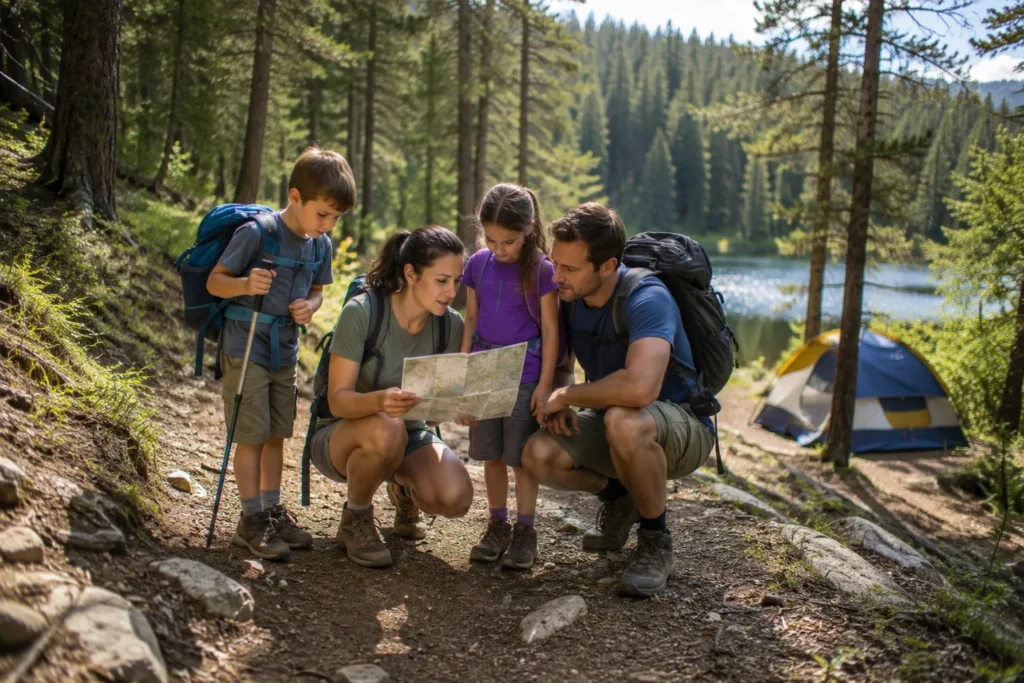
A campsite offers families the perfect base for outdoor adventures and healthy activities. According to the Outdoor Industry Association, 61.7 million Americans participated in hiking activities during 2024. Many families combine camping and hiking because both activities encourage exercise, learning, and quality time together. Choosing the right trails and preparing properly makes the experience safer and more enjoyable.
Families staying at a campsite benefit from easy access to nature trails, wildlife areas, and scenic viewpoints. Children also gain confidence through outdoor exploration. National Park Service data shows that regular outdoor activities improve physical health and reduce stress levels. We have found that simple preparation prevents most hiking problems and helps children stay engaged throughout the trip.
Successful family hikes depend on planning, proper gear, and realistic expectations. Parents should match trail difficulty to the youngest family member. Small adjustments can turn an ordinary walk into an exciting experience. These hiking tips help families make the most of their campsite adventure while creating lasting memories.
Why Hiking Enhances the Campsite Experience
Family Benefits of Combining Camping and Hiking
A campsite becomes more enjoyable when hiking activities are included. Walking through forests, lakeside paths, and mountain trails gives families opportunities to disconnect from screens and reconnect with nature. The Centers for Disease Control and Prevention recommends at least 60 minutes of daily physical activity for children aged 6 to 17.
During our camping trips, we noticed that children become more curious and active after spending time on hiking trails. Short hikes also improve sleep quality. Families who hike together often develop stronger communication and teamwork skills. These experiences make every campsite stay more rewarding.
Health and Educational Advantages
Hiking provides both physical and educational benefits. Children learn about plants, insects, and wildlife while exploring different environments. According to the National Wildlife Federation, outdoor learning improves attention spans by 27%.
Important advantages include:
- Better cardiovascular health.
- Improved balance and coordination.
- Reduced stress and anxiety.
- Opportunities for wildlife observation.
- Increased appreciation for nature.
These benefits make hiking one of the most valuable activities during a campsite vacation.
Preparing for Safe Family Hikes
Essential Gear for Every Campsite Adventure
Preparation reduces risks and keeps everyone comfortable. Families should carry lightweight essentials instead of overpacking. The American Hiking Society recommends carrying one liter of water for every two hours of moderate hiking.
We always prepare a checklist before leaving the campsite. Proper clothing and supplies prevent common issues like dehydration and blisters. Packing smart saves time and energy during the hike.
| Essential Item | Purpose |
|---|---|
| Water Bottles | Prevent dehydration |
| Sunscreen SPF 30 | Protect skin |
| Snacks | Maintain energy |
| First Aid Kit | Handle minor injuries |
| Flashlight | Improve visibility |
| Trail Map | Prevent getting lost |
| Rain Jacket | Weather protection |
Choosing Family-Friendly Trails
Trail selection matters more than distance. Beginners should choose trails shorter than 3 miles with minimal elevation changes. The National Park Service reports that easy trails reduce fatigue and encourage children to enjoy hiking.
A campsite often provides maps and recommendations for nearby routes. Rangers and campground staff usually know which paths are suitable for young children. Starting with shorter hikes builds confidence and allows families to progress gradually.
Keeping Children Engaged During Hikes
Fun Activities Along the Trail
Children enjoy hiking more when they have activities to complete. Games and challenges make the journey exciting. Our experience shows that scavenger hunts keep kids interested even on longer walks.
Popular activities include:
- Identifying bird species.
- Collecting leaves and pinecones.
- Taking nature photographs.
- Spotting animal tracks.
- Counting butterflies and wildflowers.
These simple activities transform a hike into an educational adventure. A campsite stay becomes much more memorable when children actively participate in exploring nature.
Managing Energy and Comfort
Children tire quickly if they are hungry or overheated. Frequent breaks help maintain enthusiasm. Experts from REI recommend stopping every 45 minutes for water and snacks during family hikes.
Parents should allow children to set a comfortable pace. Encouragement works better than rushing. We have learned that slower hikes often create the best opportunities for conversations and wildlife sightings. Flexible schedules keep everyone happy and reduce complaints.
Weather Awareness and Trail Safety
Understanding Outdoor Conditions
Weather conditions change rapidly in many camping areas. Checking forecasts before leaving the campsite helps families avoid dangerous situations. According to the National Weather Service, thunderstorms cause more than 300 injuries annually in the United States.
Morning hikes often provide cooler temperatures and better visibility. Families should avoid exposed areas during lightning storms. Carrying lightweight rain gear ensures everyone stays comfortable during unexpected showers.
Emergency Planning for Families
Every family should discuss basic safety procedures before starting a hike. Children need to understand what to do if they become separated. Experts recommend teaching the “stop and stay” method instead of wandering.
Safety priorities include:
- Sharing trail plans with others.
- Carrying emergency contact information.
- Bring whistles for children.
- Staying on marked trails.
- Turning back before sunset.
These precautions increase confidence and improve the overall campsite experience. Start your journey with our campsite guide.
Conclusion
A campsite provides the perfect setting for memorable family hikes. Proper preparation, suitable trails, and engaging activities make outdoor adventures enjoyable for every age group. Families who combine camping with hiking benefit from improved health, stronger relationships, and valuable learning experiences.
Our experience shows that simple planning creates safer and happier trips. By packing wisely, respecting weather conditions, and keeping children involved, families can turn every campsite stay into an unforgettable journey filled with discovery and fun.