
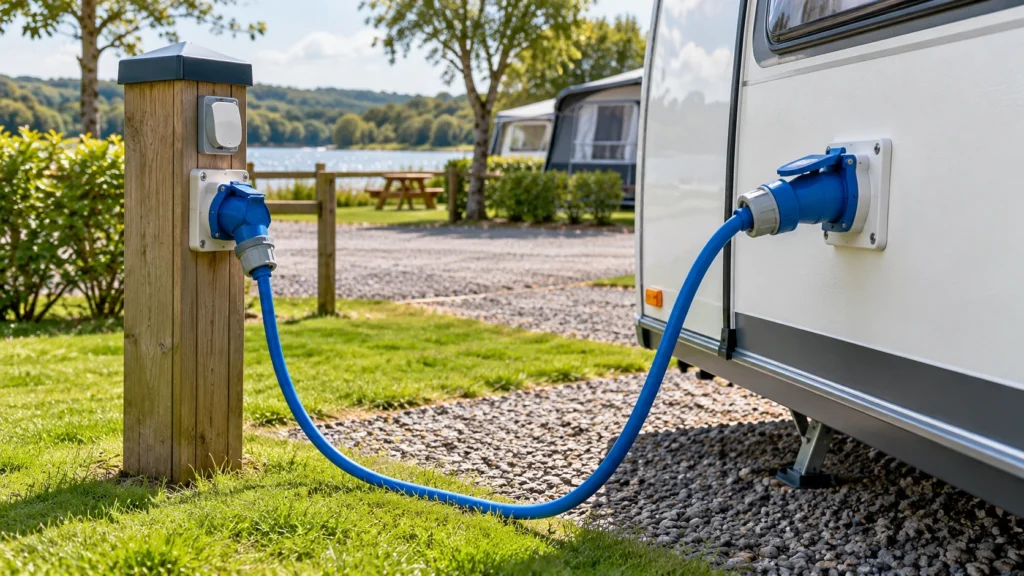
Arriving at a campsite with an electric hook-up is easier when you know what connects to what. A pitch may have electricity available, yet you still need the right cable, a suitable connector, and an understanding of how the power post works. Checking those details before you travel can save a frustrating search through your gear after dark.
What is a CEE connection?
A CEE connection is a plug-and-socket system commonly used for campsite electricity. You may see it described as a CEE connector or, in Norway, a CEE-kontakt. The familiar camping version is a blue, round connector designed for outdoor electrical hook-ups. It is different from an ordinary household plug, so a domestic extension lead alone will not connect to a typical CEE socket on a power post.
The post supplies electricity to your pitch; your hook-up cable carries it to your caravan, motorhome, or suitable camping equipment. Check the connection on your vehicle or equipment before packing. If you are staying in a tent, find out what arrangement the campsite permits for tent hook-ups and use equipment intended for that purpose. Having access to a post does not mean every appliance or cable is suitable for use outdoors.
How power posts work
A power post, sometimes called a hook-up bollard, usually serves one or more pitches. Each pitch may have its own socket, switch, meter, or payment control, depending on the site. The position of the post matters as much as its presence: the cable needs to reach comfortably from your pitch without being stretched or routed through a vehicle access area.
At Hamre Familiecamping, pitches have electricity access through CEE connections, and the campsite recommends bringing a 20 m extension cable. Electricity is charged separately through PowerPay at the power post, based on individual consumption. That is a useful example of why “electric pitch” does not always mean electricity is included in the pitch price. Elsewhere, the connection, cable length, and charging method may differ, so check the site’s information when booking.
If you expect to arrive outside reception hours, look up the arrival instructions in advance. Knowing your pitch number is only part of the preparation; you may also need to know how to identify the correct socket or activate the supply. Follow the campsite’s instructions rather than assuming that the nearest available outlet belongs to your pitch.
Choosing and using a hook-up cable
A purpose-made CEE camping cable keeps the connection straightforward. Before leaving home, inspect the plugs and cable for visible damage, and check that you have enough length for the pitch layout. A cable that only just reaches can put strain on the plugs or tempt you to place it across a walkway. If the site recommends a particular length, use that guidance when deciding what to bring.
Once parked, route the cable where people are least likely to trip over it and vehicles will not drive across it. Keep the connectors clear of standing water and avoid trapping the cable under furniture, doors, or wheels. Uncoil a cable reel fully before use, especially when running appliances that draw substantial power; a tightly wound cable can become hot in use. Follow the cable maker’s instructions and the campsite’s rules for connecting and disconnecting.
For example, imagine parking a motorhome with its inlet on the side farthest from the post. A short lead might reach only if pulled taut across the space beside the vehicle. Moving the vehicle within the pitch, or using a suitable longer cable, gives you a safer and more practical route. That is worth considering before you settle your chairs and awning in place.
How much electricity can you use?
A campsite hook-up has a limit. The available capacity varies by site and sometimes by pitch, so do not assume it will support every appliance at once. A kettle, portable heater, and cooking appliance can place a much greater combined demand on the supply than lights, phone charging, or a refrigerator. If the power cuts out when several devices are running, reduce the load and follow the site’s instructions for restoring it. Ask staff for help if the cause is unclear; do not tamper with the post.
Think about what you actually need to run at the same time. If you are making breakfast, turning off an electric heater before using the kettle may be more practical than repeatedly losing power. Check appliance labels if you are unsure about their power use. A vehicle’s electrical system may also have its own limits, even when the campsite post can supply more.
Electric vehicle charging is a separate question. Do not assume a campsite hook-up is intended for charging a car. Ask which charging arrangements are available and permitted at the property before relying on them for your journey.
For more detailed information on this topic, read our guide on Planning a Campsite Arrival Outside Reception Hours.
Understanding electricity charges
Sites handle electricity costs in different ways. Some include a set arrangement in the pitch price; others charge separately or according to measured consumption. Where a post uses a payment system, check how to start the supply, view usage, and finish the session. This is especially helpful if you plan to leave early or arrive when reception is closed.
Usage-based charging makes your appliance choices relevant to the final cost. Occasional lighting and device charging will generally use less electricity than extended heating or repeated use of high-power appliances, but the exact amount depends on the equipment and how long it runs. Read the campsite’s current terms rather than guessing from another stay.
Before you travel, confirm the connector type, recommended cable length, available capacity, and payment method. At the pitch, take a moment to identify the correct post and lay out the cable carefully. Those small checks make campsite electricity easier to use and leave you free to focus on the rest of your stay.