
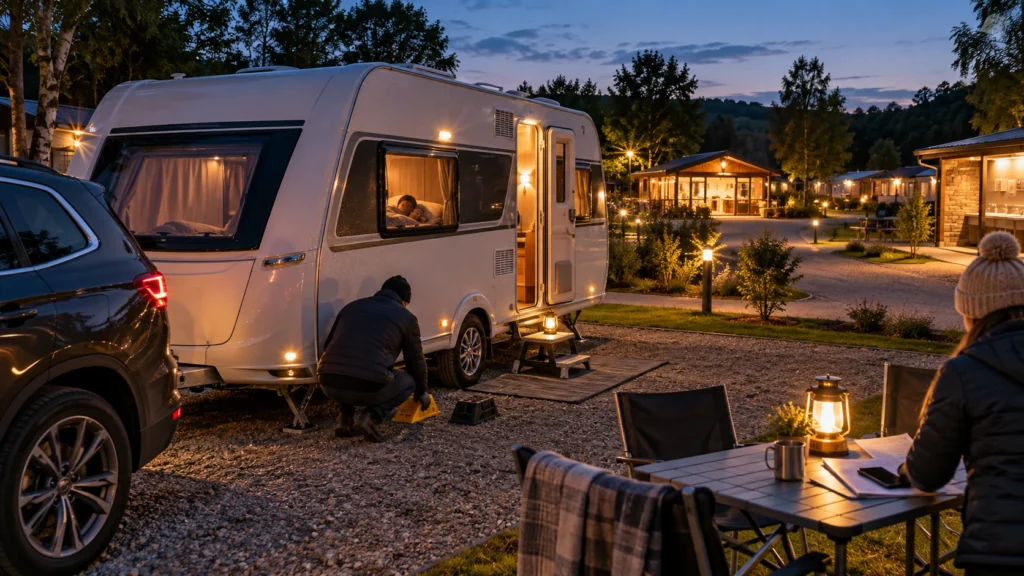
Arriving at a campsite after reception closes can be straightforward, but it takes a little more preparation than arriving in daylight with staff available. The key questions are how you will check in, where you should go, and which facilities you can use that evening. Sorting those out before you travel makes a late arrival easier for everyone, especially if you are towing a caravan or travelling with tired children.
Confirm how late check-in works
Start with the campsite’s own arrival instructions. Some sites offer a self-check-in machine, while others may provide instructions in advance or require guests to arrive during staffed hours. Do not assume that having a booking means you can enter at any time. Check whether late arrivals are accepted, whether there is a cut-off time, and how you will get any access code, barrier card, or pitch details you need.
At Hamre Familiecamping, camping guests can use a self-check-in machine for check-in and check-out outside reception opening hours. If you plan to use it, keep your booking details easy to find and check the current arrival information before setting off. Knowing that a machine is available is helpful; knowing where to go and what you need to complete check-in is what makes the arrival smooth.
If your plans change during the journey, update the campsite where possible. A delay that moves your arrival from early evening to late at night may affect how you enter or where you can stop. It is also worth checking whether instructions differ for a tent, motorhome, caravan, or cabin booking.
Prepare the details you will need on arrival
You do not want to search through emails at a dark entrance with another vehicle waiting behind you. Save your booking confirmation somewhere you can access without a mobile signal. Note the campsite address, your booking name and reference, the check-in method, and any directions to the arrival point. If instructions include a map, download it before leaving.
A short arrival checklist can help:
- Booking and contact details: Keep the confirmation and campsite phone number available to the person navigating.
- Entry instructions: Record any code or steps supplied by the campsite, and check whether they apply to the gate, check-in machine, or both.
- Pitch or parking information: Know whether you have an assigned place or will receive one during check-in.
- First-night essentials: Pack a torch, suitable footwear, bedding, and the items you need before morning where they are easy to reach.
Charge your phone before the final part of the journey, but keep essential details in another form as well. A screenshot or written note is useful if coverage is poor or a booking email will not load.
Make the last part of the drive manageable
An unfamiliar campsite is harder to navigate after dark, particularly with a trailer or a large motorhome. Look at the route to the entrance in advance rather than relying only on a navigation app’s final instruction. A map pin may lead you to a neighbouring road or a pedestrian entrance instead of the vehicle entrance.
Give yourself time for a stop before you reach the campsite. It is easier to find the correct entrance, complete check-in, and set up the basics when no one is rushing. If you are towing, consider where you can pull over safely to read instructions without blocking the entrance. Avoid stopping across a gate while you work out what to do next.
For example, a family arriving with a caravan after a long drive may be tempted to unload everything immediately. A better first step is to confirm the correct pitch, park safely, and set up only what is needed for the night. The rest can wait until daylight, when it is easier to see boundaries, nearby campers, and any obstacles.
Set up quietly and safely
Late check-in is also an arrival into a space where other guests may already be asleep. Keep vehicle movements to a minimum, use a torch directed toward the ground, and leave noisy tasks until morning when practical. If you cannot confidently identify your pitch, do not occupy an empty-looking space at random; it may be reserved or unsuitable for your setup. Use the campsite’s stated contact or arrival procedure to resolve uncertainty.
Once you reach your pitch, check that the ground and access are suitable before committing to the setup. A few minutes spent looking for slopes, obstacles, and nearby vehicles can prevent an awkward repositioning later. For a tent, prioritize a secure basic setup and bedding. For a caravan or motorhome, focus on parking correctly and making the sleeping area usable. Extra furniture and awnings can usually wait.
Electricity needs particular attention. If your booking includes an electrical connection, confirm where it is and follow the campsite’s instructions for using it. Do not stretch a cable across a route used by vehicles or pedestrians. If the connection point is unclear in the dark, use battery-powered lighting for the night and ask for help when staff are available.
For more detailed information on this topic, read our guide on How to Plan a Comfortable Camping Trip with the Whole Family.
Check what is available overnight
Facilities may have different access arrangements from reception. Before travelling, check how you can reach toilets and showers, whether you need a code or card, and whether cooking or other shared areas will be accessible when you arrive. Pack water, snacks, and anything needed for young children or medication so the first night does not depend on finding an open facility.
If you are travelling in an electric vehicle, plan charging separately from campsite check-in. The presence of charging facilities does not tell you whether a charger will be available, accessible overnight, or suitable for your vehicle. Check the current arrangements and keep enough charge to reach an alternative if needed.
The most useful late-arrival plan is a simple one: know the entry process, keep your details accessible, find your place without guesswork, and make only the setup you need for a comfortable night. You can explore the site and settle in properly the next morning.